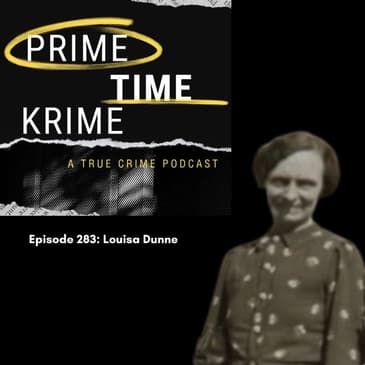
The oldest unsolved case in UK history has been solved after 57 years. Today I tell you the victims story. Louisa Dunne was so much more than what happened to her. Her case is finally solved and the perpetrator was arrested, but why did it take 57 years? Let's unpack it all.
Sources for episode:
https://www.itv.com/news/westcountry/2025-06-30/louisa-dunne-the-1967-murder-victim-in-britains-longest-running-cold-case
https://www.murderinmortongrove.com/photos
https://www.itv.com/news/westcountry/2025-06-30/pensioner-92-guilty-of-murdering-widow-six-decades-ago
https://en.wikipedia.org/wiki/Murder_of_Louisa_Dunne
https://www.nytimes.com/2025/07/01/world/europe/cold-case-bristol-murder-louisa-dunne.html
https://www.rightmove.co.uk/house-prices/details/ad33d5e5-3946-457f-a204-ff70a275a892
https://www.theguardian.com/uk-news/2025/jul/04/graveyard-spiral-why-louisa-dunne-cold-case-breakthrough-may-be-a-rare-win
https://www.bbc.com/news/articles/c36xw0ryw51o
https://www.cps.gov.uk/south-west/news/92-year-old-man-jailed-life-1967-cold-case-murder
https://www.cbsnews.com/amp/news/louisa-dunn-murder-man-92-convicted-uk-oldest-cold-cases/
https://www.itv.com/watch/cold-case-justice-solving-the-murder-of-louisa-dunne/10a6960a0001B/10a6960a0001
https://www.standard.co.uk/news/crime/taylor-bristol-suffolk-ipswich-dna-b1233448.html
https://www.doughtystreet.co.uk/news/prosecution-oldest-cold-case-murder
https://www.bbc.com/news/articles/c24vvdp371jo
https://www.theguardian.com/uk-news/2025/jun/30/louisa-dunne-murder-conviction-granddaughter
Warning, this episode contains graphic crime scene detail as well as talk of sexual assault. Please listen with discretion. Warning, this episode contains graphic crime scene detail. Please listen with discretion. Welcome to Primetime Crime. I'm your host, Kylie. Let's talk right now on true crime and then together we're going to work on warming up some cold cases. Let's go. Hey guys, welcome to this week's episode of Primetime Crime. It's Kylie. We are going to go ahead and get into right now on true crime before we get into this week's case. So let's start with the obvious, which is the Lizzie Clancy trial. So at the end of last week, we were still kind of in a holding pattern. And when Friday deliberations resumed, the jury did, in fact, come back and say that they were not able to reach a unanimous verdict. And it was alluded to that essentially there was one holdout and they were not able to successfully all come to the same conclusion. But where the issue lied was there. Were reports that this juror said that there was reasonable doubt, but that they were not going to change their vote. So it got into a lot of back and forth between the... judge and the defense, Kevin Reddington, about if this juror should be removed or not because they weren't following the letter of the law, meaning if you do have reasonable doubt, then you have to side accordingly and that wasn't happening. So there was a lot of back and forth and back and forth. Essentially, the judge decided not to remove the juror and the Kevin tried to fight to make sure that this juror was removed so they could resume deliberations because they had been deliberating for many days at that point in time. But ultimately, it did end, in fact, in a mistrial. So now there are, of course, jurors who are speaking out. And that has all just started happening as of today. I'm recording this on Wednesday. So, so far, I think we've heard from a total of four jurors and three of them kind of spoke out together and they were just speaking on their experiences and how things were in the jury room. And they said that initially they were not all on the same page, but after going through several different things, they were able to all pretty much come to the same conclusion that they did believe that Lindsay was not mentally in her right mind when she was took the lives of her children, and then tried to take her own life. So they were all. At one point thinking that everybody was on the same page, but the Wunder said that he was not going to change his mind. even though he said he had a reasonable doubt, he also was refusing to change his mind. So I think. There's a lot of gray area there. Honestly, I don't really know. I wasn't in the jury room. I don't know anything about like that aspect of things. I have never been a juror, but I assume after days and days and days, they were all really frustrated. I know they said that at some points people would just get up and start walking around because nothing was getting accomplished or I've also heard at times that this juror just kind of shut down and stopped participating, and it was just a hot mess disaster. And I imagine because they had been. There for so long, not just deliberating, but everything, the trial, all the evidence, everything that they had to sit through and listen to and shift through, going through all of the evidence once they were officially brought into the jury room, everything that they had to look at, all of the evidence. I am assuming. That they were very, very overwhelmed and I think that by the end of it, they were all just at their wit's end with everything. So that is kind of where things stand today. Obviously, the prosecution can make the decision to retry the case against Lindsay, but we do not know if that is going to happen yet. So everything is kind of in a holding pattern right now. But let me tell you, the Lindsay Clancy case and the trial brought so many people out of the woodworks. And I think a lot of people that normally typically don't consume true crime, so they really don't understand the way that the court system works and how things work logistically. And I think. That there was just, there's a lot of internet talk, a lot of chatter, a lot of people, like I said, who don't normally consume true crime, putting their opinions out there and a lot of keyboard warrior action going on. So I'm going to keep you guys updated on this one. I don't really know what to think about all of it. I think it is a very complicated case. Obviously, it's a very complicated case. There is a lot. I do believe that women's mental health and postpartum issues are real and relevant. I do believe that Lindsay did everything she could to try and seek help. And there is evidence of that. There's also evidence that she did not get the help that she needed. She... tried so hard to get help for herself. And unfortunately, the system failed her and failed her children. That is my personal. Opinion on it. But we will see what comes of it. I will be sure to keep you guys in the loop. So moving on to Barry Morphew, a guy that just can't seem to stay away from getting in trouble. He was arrested, actually, in relation to charges that stem from a hit and run that occurred in Denver. So Barry has been charged with careless driving, leaving the scene of an accident, failing to report the accident, driving without a driver's license, and failure to display proof of insurance in his connection with this collision. He is scheduled for a court date on September 15th for a plea hearing. So obviously we know Barry is awaiting trial on the charge of first-degree murder in the death of his wife, Suzanne Morphew. He has pled not guilty, has denied all involvement. We have obviously a lot of probable cause and things that have come out, and. I think we're going to learn a lot more in trial. But now he is involved in this hit and run, and he looks horrible. He really looks like he has been struggling, and I love that for him personally. But that is just my opinion. Now, they have increased his bond from $ 3 million to a $ 10 million cash-only bond because of this hit and run, because obviously he is having a difficult time abiding by the laws. And speaking of someone who doesn't like to abide by the laws, Alec Murdaugh, they have officially set his trial for Sumter County, South Carolina. next year in April of 2027. The trial is scheduled to begin the week of April 5th, and it is going to be under Judge Deborah McCaslin. So I will be sure to keep you guys updated on this one. Will he testify? Will he not? Is there going to be more that comes out? I don't know what's going to happen. It's going to be interesting and it's going to be a long trial. I just have a feeling. So that is really it for right now in true crime. If there are any other breaking things happening, I will be sure to update them and put them on my social media. Sometimes it's really hard for me to, I don't like to record right now on True Crime on Thursday. I like to do it on Wednesday so that way I can get the edited episode spliced together and released on Thursday. But I swear every time I record anything and I think I'm done, something big happens on Thursday and then I feel like I have to go back in and re-record and all of the things. But if anything does happen on a Thursday when I've already recorded, I will just be putting it on socials. And if I really need to talk about it, I will do an emergency type of episode to talk about it. So that is where everything stands right now. This week's episode is one that I think is so important to share. And I really hope you guys. understand the importance of me sharing episodes like this because it is so important in the unsolved true crime community that episodes like this get shared and people realize that there is a reason that we do these cold cases because there is a way somehow or another for them to get solved. And this episode is proof. So let's go ahead and get into this week's case. Alrighty guys, today we are jumping into a brand new case and I think that this is one of the most interesting cases that I have ever covered. And the reason is because I'm going to be telling you about one of the oldest cold cases to ever be solved in the UK. Now, this is a case that was recently solved and somebody was finally apprehended. After a 57-year investigation, there has finally been resolution in the case of Louisa Dunn. And I really want. To highlight this case because this is a homicide that happened in 1967, which obviously in doing the math is a long time ago. And it was a case that looked like justice was never going to be served. just because of how much time had gone on. But it also is proof that it truly never is too late and that DNA evidence and advancing technology is completely changing the game. So in today's episode, I'm going to be telling you about the now-solved homicide of Louisa Dunn. Louisa was 75 years old when her life was tragically cut short in Bristol, England in 1967. We are, as always, going to get into a little bit of her background and how her case was finally solved. after all of this time. Because this is an older case, there really isn't a ton of public information out there about Louisa, but I was able to find an article that was published by ITV.com that really went into detail about Louisa and her life and who she was as a person before her life was taken. So I am going to be relying heavily on that article for the background information on Louisa for this episode before we get into what happened to her. Louisa Jane Jarrett was born in 1892 in Gloucestershire, England. Louisa eventually went on to meet and marry Edwin Teddy Parker in 1915, and he is described as a rising star of the city's socialist movement. He was a union leader and a labor counselor for the St. Paul's Ward. Together, they had two daughters, Edna and Iris, and their life together was very much based around politics. Teddy was even set to. Be up for a mayoral run, but ended up suffering a stroke and was bedridden and in the hospital for much of the early 40s. Teddy passed away in 1945. There is actually a photo of Teddy being wheeled in to vote from his hospital bed. So he was very, very dedicated in a political sense. So once Teddy passed away, Louisa was 53 years old and she found herself as a widow. Edna's daughter and Louisa's granddaughter, Mary, recalls through pictures how much her grandmother, Louisa, supported her grandfather, Teddy. She said in all of the photos that she has seen, they were always together. And she also said, come to think of it, she never saw a picture of Louisa by herself. She was always with Teddy. After Teddy passed away, Louisa suffered what her granddaughter describes as kind of a mental breakdown. And she kind of spiraled and started to abuse alcohol, which eventually caused a rift between her and her daughters. Louisa later, in 1952, got remarried to a man named John Dunn, who was a night watchman. There isn't really much publicly known about their marriage or really much about her husband John at all, but he unfortunately ended up passing away in 1961, so Louisa was once again a widow. And at this point in time, she was 69 years old. She had had two of her spouses pass away. She decided to settle into life in the Bristol area of England. She lived at 58 Britannia Road in the Easton neighborhood, which is described as a working class neighborhood. The homes were all terrace type of homes, which are described as single family dwellings that sit in a row. They typically share sidewalls with properties next to them. Now I am going to have photos of Luis's home on my Instagram and Facebook pages. So you can see the type of home that I am describing. But with all of that being said, this was a very close community and everybody kind of knew everybody. Louisa was described as a pillar of the community and was always very friendly. She was at her front door, always ready to chat with her neighbors or those that were passing by. Since this was a very close-knit community, neighbors realized when something was off with one of their neighbors. If they noticed a window was randomly open when it typically wasn't, or when they would see that a neighbor hadn't been out and about as usual, they took notice. And that's exactly what happened in Louisa's case. So let's go ahead and get into her story. On June 28th of 1967, a neighbor of Louisa's had noticed that Louisa's sash window was open, and that was something very unusual. She always was very safety conscious, and she would not leave her window open. This was something that she did not do. So her neighbor proceeded to look into the window of Louisa's home where they spotted Louisa on the floor. She was deceased in her front room. Now, there were a couple of things found in Louisa's home that later would turn into what solved this case. But in 1967, it really didn't seem like much. They did have a palm print that was found on a rear window, which investigators believed definitely was the entry point for whoever entered Louisa's house that night. Now, back in 1967, there was no CCTV surveillance. There was no exterior street lighting or anything that would really deter anybody from breaking and entering. So this was an area of Louisa's home that could have been used to access homes and remain undetected. And that is exactly how this perpetrator was able to access her. Home that night. Louisa had been murdered by strangulation and was sexually assaulted. It was determined that she had been killed between 10 p.m. And 4 a.m. Louisa had been wearing a blue skirt when she was attacked, and her attacker had left behind physical evidence on the blue skirt. But that wouldn't be evident until many, many decades later. So we have the palm print that, again, is a great piece of evidence, but it's 1967. And we have a blue skirt that does have DNA material left behind on it. But investigators aren't going to be able to do much with any evidence until much, much later from a DNA standpoint. These pieces of evidence would be critical in solving Louisa's case, but it very much was a waiting game. They were waiting for technology to catch up, and they were also waiting for someone to take a second look at the evidence that was taken and collected back in 1967. Upon the discovery of what had happened to Louisa, Bristol's police department went ahead and launched a massive investigation. They took over 2,000 statements and went house to house in the area around Louisa's home. They were attempting to figure out who this palm print belonged to. and they took palm and fingerprints from 19,000 men and boys located in the area surrounding Louisa's home. They did speak to someone who lived close to Louisa, a woman who was named Violet Fortune. And actually, Violet is the same woman that ended up finding Louisa after she noticed her window was open. Violet said that she had heard a scream in the night, and she said it sounded a little bit muffled, but enough that it concerned her. So she got out of bed and looked out her window. And didn't see anything. It was obviously dark. There were no streetlights. So she went back to bed, and after about a minute, she heard someone cry out, but that cry out only lasted for about two to three seconds. There was another neighbor who was also awoken by his dogs that night, and he also heard the scream, but he described it as a very muffled type of scream as well. Of course, obviously, hindsight is 20-20. And I'm sure none of her neighbors ever thought that something was seriously wrong until. They started to put pieces together. They really hadn't seen Louisa the way that they normally would. And they saw that her window was open. So after law enforcement gathered the prints of the 19,000 men over the next year, they had their work cut out for them. Back in 1967 in England, they didn't have a fingerprint database for comparison. So they pretty much, one by one, had to go through and compare all the prints that they had taken from different men and boys in the community and compare it to the print that was left at the scene of the crime. Also, super important to note. That the print that was left was a very specific area of the hand that was left. It was a print of the palm and wrist in the area between the pinky finger. So this was a very specific area of the hand that they were going to be analyzing. Although the investigation was thorough, and I really do want to say that I think the investigators did a really good job at looking into everything that they could. They were going around and fingerprinting different people, trying to compare it to the fingerprints left at the scene. I think that they really did do an incredible job considering the fact that it was 1967. They very much had limited resources and the technology just was non-existent. But despite all that they did, they came up empty-handed every single time. And this eventually led to the case becoming cold and no arrests or persons of interest were ever named. We'll learn soon enough, but unfortunately, the killer, the guy who ends up being identified as Louisa's killer, would end up living outside of the area where the door-to-door questioning and fingerprinting was done. So this individual was able to evade capture and remained free for many, many years and would go on to re-offend again before the time he was finally captured for Louisa's sexual assault and murder. So they did about a one and a half mile radius door-to-door questioning, fingerprinting of all men and boys in the area. If men were away for military service, they also had to submit their prints because they were trying to cross-check everybody. But they only did a mile and a half. And we will learn in a little while that this individual lived just outside of that mile and a half radius. And I mean just outside. So from 1967, we're going to fast forward to 2023. And yes, you did hear that right. We're going from 1967 to 2023, 56 years later. So in 2023, the Avon and Somerset Police Major Crime Review Team, which is called the MCRT, made a move on Louisa's case. So the MCRT's function is to basically go back through all of the unsolved crimes in their area and go back and review them and look at them with the lens of 2023 and, of course, 2023 technology. So they were in a period where they were going through older cases, and they asked themselves one question. Are there forensics available that have not been pursued? Is there DNA evidence? Is the DNA evidence suitable for testing and available? When they happened upon Louisa's case, they realized that there was, in fact, DNA evidence. The evidence had never been submitted for DNA analysis. Now, That simply just means that over the years before 2023, nobody ever went back and reviewed the fact that there was DNA evidence. Because Louisa's murder also involved a sexual assault and Louisa was wearing this blue skirt at the time of her assault and murder, that blue skirt did. In fact contain DNA evidence. So we also have to give credit to whoever collected the evidence back on that day in 1967. They tagged it appropriately, they bagged it appropriately, and they entered it into evidence, not knowing that one day technology would advance enough that they would be able to take the evidence from that skirt and link it to the suspect. In 1967, DNA analysis was not a thing. And this person who took this evidence did a great job of collecting it and then storing it. And all throughout the years, they were able to keep this evidence contained. It wasn't thrown away. It wasn't tossed to the wayside. They kept it and they kept it in good shape. So that way it could be tested in 2023. Now, they didn't just have the skirt. They also had the palm print, which was huge. Now, they had documentation of this palm print and they actually had the palm print from the window. And earlier, I talked about how they had tested 19,000 people to compare it to them, and unfortunately, all of their comparisons came up with no match. So at this point, they still didn't know who this palm print belonged to, but they knew if they could find out who the palm print belonged to, and they can match the DNA evidence from the blue skirt to them, that they would officially have their person. So they were able to test the DNA evidence from Louisa's blue skirt, and they did develop a full DNA profile of the suspect. It was a one billion times more. Likely that the suspect was. A man named Rylan Headley over anyone else. Rylan's DNA was in the national database associated with a 2012 assault on that he was questioned in but never charged in. And that is how they were able to figure out that his DNA was the DNA on this skirt. Now, at the time of the questioning, like I said, they did collect his DNA, but they never did take his handprints or his fingerprints or anything like that. And the reason that he avoided that from happening is because He told them that he had arthritis and he wasn't able to move his hand in the way that they needed him to in order for them to take his palm prints and his fingerprints and all of that. He said that he was older and he had arthritis and it was too painful for him to have his prints taken. So once they got a name of a suspect that matched the DNA found on Louisa's shirt, they ended up bringing in four fingerprint experts. and they all came to the same conclusion that they believed the perpetrator was Ryland. He was no doubt their guy. In November of 2024, law enforcement went to Ryan Healy's home, which was located on Clarence Road in Ipswich, England. At 92 years old, he was arrested and charged with the murder of Louisa Dunn. Ryland was a widow himself and a father and grandfather. And like so many other cases where the perpetrator has passed away, that was not the case here. This guy was still living and they were able to arrest their suspect. So let's get into Ryland and his background a little bit because obviously Ryland wasn't this upstanding citizen as we know. So he was 34 years old at the time of Louisa's murder and he was working as a railway worker. when he committed this crime. So he was 34 and he was apprehended at 92 years old. So let that really sink in. That is how long it took for this man to get caught. Ryland was married at the time of Louisa's attack. And like I said, it's truly no shock that he wasn't a super clean, upstanding citizen. In October of 1977, he sexually assaulted two separate elderly women, ages 84 and 79. He targeted them because they were elderly, they were alone, and they were vulnerable, just like Louisa. He broke into their homes and attacked them. He was convicted on two counts of rape in both of these cases, and he confessed that He was initially sentenced to life in prison in these two cases, but they ended up reducing it to seven years on appeal. Unfortunately, the DNA database didn't exist back then. If it had existed, he would have been apprehended probably sooner rather than later. Ryland lived on Picton Street in Bristol at the time of Louise's attack. Like I said, he was married. He lived 1.6 miles away from Louisa's house. So although he was close by, he was outside of the window of people that they had gone door to door to and questioned and fingerprinted and all of that. Again, if they had gone out a little bit further, they would have fingerprinted him and gotten him pretty much right away, and he would have been off of the streets. And I say that in no way to undermine anything that law enforcement did, because I think they did an amazing job investigating Louisa's case for 1967. They could not go around and fingerprint everybody. They did a lot of fingerprinting. And I think they did the best they could. Unfortunately, this horrific human just happened to get lucky in a way of being able to escape authority for such a long time. Shortly after Louise's murder, he uprooted his family and moved to London. But later, Ryland would move back to Ipswich. So it's believed that Ryland had broken into Louise's home that night and he attacked her. Louisa fought back, and she truly did fight for her life, and that is why he proceeded to end her life. They believe her manner of death was consistent with strangulation and asphyxiation, consistent with a hand held over her mouth, and pressure applied to her throat. He also robbed her, and like I said, he sexually assaulted her. The judge said that he might not have intended to go in there and murder her, but she fought back to defend herself and defend her home, and Ryland took it upon himself to take actions to end her life. When he was arrested, Ryland played dumb and said he didn't know what they were talking about. But the evidence didn't lie. Ryland was found guilty in the crimes committed against Louisa. A jury of eight men and four women found him guilty on June 30th of 2025. Now, there were two holdouts that wanted to find him not guilty, but it wasn't an all-or-nothing type of case, so majority ruled. And I do think it's interesting and very shocking that there were two holdouts, and I can't help but think that maybe Ryland's age had something to do with it because... He is a 92-year-old man, probably a little bit frail, and often I feel like people can sympathize more with someone who is elderly being tried in court on something versus somebody who is younger being tried in court. I hear it a lot with Bill Cosby, and people say just leave him out of jail because he's old, but that doesn't mean that he doesn't deserve to pay for the crimes that he did. And that's the same in Ryland's case. But there was evidence. There was the DNA evidence and there was the fingerprint palm print evidence. And those don't lie. Needless to say, like I said, it was majority rules. So they found Ryland guilty. On July 1st of 2025, he was sentenced to life imprisonment with a minimum of 20 years before parole eligibility, which will never happen because Ryland is 92. England law rules. That you can only apply the laws at the time of the offense. So the judge had to go off of the 1967 laws when sentencing Ryland. Luckily, he's old enough that he will never see the light of day again. The judge made it very clear that Ryland will, in fact, die in prison. Ryland was a stranger to Louisa, and he targeted her because she was elderly and she was alone. And he probably didn't think that she was going to fight back. And he unfortunately would go on to do that. Again and again. And honestly, allegedly, in my opinion, I wouldn't be shocked if he's responsible for more sexual assaults. And who knows, maybe he's connected to some other unsolved homicides in England. Upon Ryland's arrest and subsequent trial and conviction, Mary, who is Louisa's granddaughter, she was 78 years old when all of this broke and all of this was coming out. And she was so surprised by the fact that they were able to actually catch the perpetrator. And I don't think it was something she ever thought was actually going to happen in her lifetime because, like I said, she is 78. She is two years older than Louisa was when Louisa's life was taken. And she said she did not know her grandmother well. She had only met her once when she was a teenager. But she does remember her being very keen and very friendly. And she would always hold her hand really, really tightly whenever they were together. And the murder of Louisa and their family was a very sore subject because Louisa Mary was 20 years old. She was in school at the time, and her mother was estranged from Louisa because Louisa had been grieving the loss of her husband, and it just kind of ended up straining their relationship overall. So Mary kind of went on to live her life, and they didn't really talk about Louisa's murder in the family very much at all. And then years passed, and she would just kind of randomly start thinking about her grandmother, and she would look at pictures of her grandmother, and then she realized that she really didn't know much about her at all. And she had pretty much resigned herself to the fact that there was never going to be anyone caught or held accountable for Louisa's murder. And she had basically accepted the fact that she would never find out who was responsible for killing her grandmother. And Ryland being caught and linked to Louisa's sexual assault and murder was deeply emotional for Mary. And it brought up a lot of feelings because Mary was not really close with Louisa. She didn't really know anything about her. But at the end of the day, they were family. And she does say that she feels a deep personal connection to her. And the fact that there is resolution in this case and she's been able to see the person responsible go to trial, get convicted, be sentenced, and go to jail is truly some type of miracle. It really, really is. Mary also said that over the years, she had encountered people who asked her, why are the police wasting their time and their money on trying to figure out who did this? But in her opinion, it needed to get all the attention that it did because there is always a chance that that can be solved. And What Ryland did to Louisa was horrific and horrendous, and he deserved to not be out and about walking amongst the regular population and living his life. He deserved to be behind bars for what he did to her. And that is exactly what is happening to this day. So I really do want to encourage everybody, if you have a cold case that you hold near and dear to your heart, I have many. Obviously, I cover a lot of cases on here, and I always say it's never too late. But I think that Louisa's case is proof that it really is never too late. because things are advancing. People are looking back into some of these older cases, and they are getting solved, and the people are getting apprehended. Whether or not the suspects are living or deceased, we're getting answers to a lot of cold cases. 2026 has been a wild year for cold cases in one right after another, right after another. So if you're listening to this as somebody that has a cold case that is very important to them and you feel like 20 years have passed and there's no way you're ever gonna get answers, look no further than Louisa Dunn's case. And that is exactly why I wanted to share it because I think it holds such an important message that time truly is not running out for cold cases, it's running out for the suspects. So I am going to leave you with that. And I hope you guys have a great weekend coming up. And I really do appreciate you listening to Louisa's story. And I'm going to be sharing photos of her on my Instagram and Facebook pages. and sharing a little bit more about her life and who she was, because it seems like she was this truly amazing person, and she did not deserve the ending that unfortunately was given to her. But thank you guys always. Have a good one, and please, please, please stay safe. Bye.